Unveiling Microsoft's Secure Future Initiative (SFI): A Blueprint for Next-Generation Cybersecurity
Unveiling Microsoft's Secure Future Initiative (SFI): A Blueprint for Next-Generation Cybersecurity
In the ever-shifting sands of the digital realm, where threats morph and proliferate with alarming speed, the concept of security has transcended mere functionality to become a fundamental pillar of technological advancement. Microsoft's Secure Future Initiative (SFI) embodies this profound shift, a testament to their unwavering commitment to placing "Security above all else." This isn't just a new policy; it's a comprehensive, continuous endeavor to revolutionize how Microsoft designs, builds, tests, and operates its vast array of products and services, all with the singular goal of achieving the highest possible security standards.
For organizations navigating the complexities of hybrid cloud environments, understanding and potentially adopting principles from initiatives like SFI is crucial. This article aims to demystify SFI, explore its current implementation within Microsoft, outline its high-level reporting, and offer practical guidance for both cloud users and our esteemed Microsoft Partners.
What is the Secure Future Initiative (SFI)?
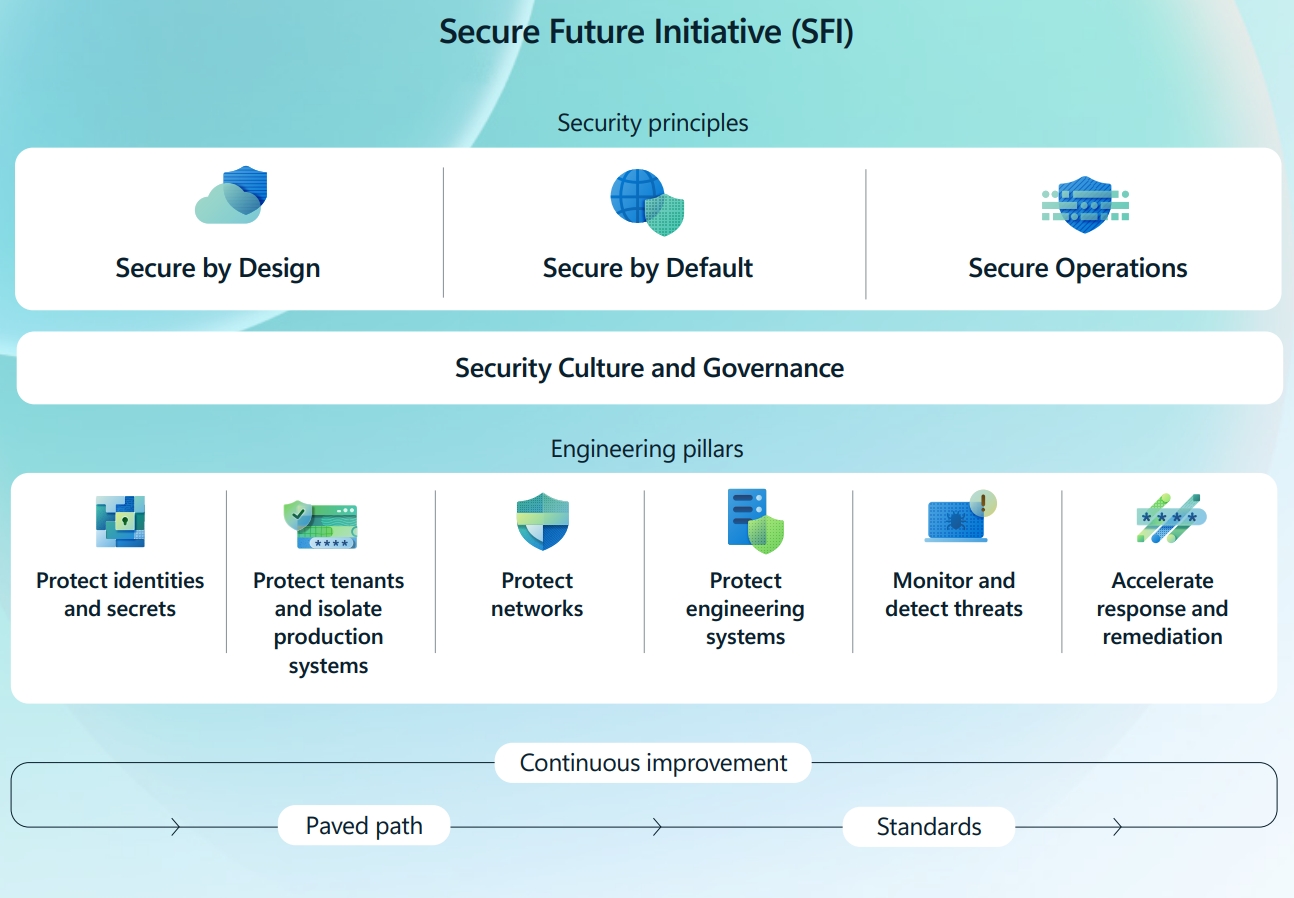
The Secure Future Initiative, or SFI, is Microsoft's overarching strategy for elevating its security posture across the entire organization. It's a fundamental commitment to embedding security into every aspect of the company's operations, from the initial spark of an idea to the ongoing maintenance of live services. SFI is built upon three core principles:
- Secure by Design: This principle dictates that security considerations must be at the forefront during the earliest stages of product and service design. It means thinking about potential threats and vulnerabilities from the outset, ensuring that security is not an afterthought but a foundational element.
- Secure by Default: This principle ensures that security protections are not optional extras but are enabled and enforced by default. Users shouldn't have to go out of their way to secure their environments; the necessary safeguards should be in place from the moment a product or service is deployed.
- Secure Operations: This principle emphasizes the continuous improvement of security controls and monitoring mechanisms. The goal is to stay ahead of evolving threats and ensure that Microsoft's defenses are always robust and up-to-date.
These principles are further underpinned by a robust Security Culture and Governance framework and are implemented through six key Engineering Pillars:
- Protect Identities and Secrets: Safeguarding user identities, credentials, and sensitive data.
- Protect Tenants and Isolate Production Systems: Ensuring the security and isolation of customer environments and critical infrastructure.
- Protect Networks: Securing the digital perimeter and all network communications.
- Protect Engineering Systems: Hardening the systems used to build, test, and deploy software.
- Monitor and Detect Threats: Proactively identifying and responding to potential security incidents.
- Accelerate Response and Remediation: Swiftly addressing vulnerabilities and security breaches.
SFI isn't a static program; it's a dynamic, continuous improvement cycle. The initiative is deeply intertwined with Microsoft's commitment to Zero Trust principles, aiming to ensure that every interaction and access request is verified, authenticated, and authorized. The initiative also actively maps its progress and objectives to established cybersecurity frameworks like the NIST Cybersecurity Framework (NIST CSF), providing a structured and recognized way to measure and communicate its advancements.
How Microsoft Leverages SFI Today
SFI is not just a theoretical framework; it's actively shaping Microsoft's internal processes and product development. The initiative permeates every level of the organization, from the executive suite to individual engineers. Here's a glimpse into how Microsoft is operationalizing SFI:
Culture and Governance:
- Embedding Security in Performance: Security is now a core component of employee performance reviews. Every employee has a Security Core Priority (SCP), and their performance against it influences rewards and recognition. This approach underscores that protecting the company is as critical as meeting business targets.
- Talent Development: Microsoft has invested in fostering a security-first culture through enhanced hiring, onboarding, and performance management systems. This has bolstered accountability and accelerated the development of cybersecurity talent across the organization.
- Expanded Governance: The Cybersecurity Governance Council has been expanded to include more Deputy CISOs, covering critical areas like supply chain, marketing, finance, and European regulations. This ensures a holistic approach to cybersecurity risk and compliance.
- Global Initiatives: Microsoft has launched the European Security Program to enhance partnerships with European governments and actively participates in global initiatives like the Advancing Regional Cybersecurity Initiative in the Global South, advocating for stronger cybersecurity worldwide.
Security Principles in Action:
Microsoft teams are consistently delivering innovations aligned with the SFI principles. Here are a few examples:
- Azure: Mandatory Multi-Factor Authentication (MFA) is now enforced for all Azure service users, significantly reducing the risk of account compromise. Azure Bastion Developer offers secure-by-default VM connectivity, shrinking the attack surface. The release of Microsoft Cloud Security Benchmark v2 provides customers with updated security baseline guidance.
- Microsoft 365: A dedicated AI Administrator role has been introduced to enforce least-privilege for new AI capabilities, including Copilot, and enhanced agent lifecycle controls provide more granular oversight. Microsoft Purview now offers enhanced data security posture management for AI, providing better control and visibility over AI usage.
- Windows 11 & Surface: Automatic recovery capabilities and enhanced passwordless sign-in options (via passkeys and Windows Hello) improve user experience and security. Microsoft Surface is also leading the charge in developing firmware and drivers using memory-safe languages like Rust, aiming to drastically reduce common software vulnerabilities.
- Microsoft Security: Expanded AI data risk protections are being implemented, alongside an AI-first platform for Microsoft Sentinel. New Security Copilot agents are designed to automate repetitive IT and security tasks, boosting efficiency.
Engineering Pillars Driving Progress:
SFI's six engineering pillars are the engine of its progress. The initiative has made substantial advancements across these pillars, with a significant number of objectives nearing completion or showing strong progress. Key achievements include:
- 99.6% adoption of phishing-resistant MFA for users and devices, a monumental step in securing identities.
- 44,500 higher-risk users have been moved to locked-down Azure Virtual Desktops, enhancing the security of critical access.
- Complete network device inventory and lifecycle management are now in place, ensuring a clear understanding and control of the network infrastructure.
- 99.5% detection and remediation of live secrets in code minimizes the risk of credentials being exposed.
- Over USD $17 million awarded to promote responsible disclosure of vulnerabilities, fostering a robust bug bounty program.
- Over 50 new detections deployed to target high-priority tactics, techniques, and procedures, which will be integrated into Microsoft Defender.
These advancements are not just internal achievements; they directly translate into enhanced security capabilities for Microsoft's customers across its extensive portfolio, including Microsoft Entra, Purview, Defender, Sentinel, and Intune.
Reporting and Key Metrics
Microsoft provides regular updates on SFI's progress, often through its Security Blog and dedicated progress reports. These reports offer a transparent view of the initiative's momentum and impact. High-level reporting often includes:
- Objective Completion Status: SFI tracks progress against 28 aligned objectives, categorizing them into "Nearing Completion," "Significant Progress," and "Ongoing Progress." As of the November 2025 report, 5 objectives were nearing completion, and 12 had made significant progress.
- Key Performance Indicators (KPIs): Specific metrics are highlighted to demonstrate tangible security improvements. Examples include the percentage adoption of phishing-resistant MFA (99.6%), the number of users migrated to secure environments (44,500), and the significant investment in vulnerability disclosure programs (over $17 million awarded).
- NIST CSF Mapping: SFI progress is mapped against the NIST Cybersecurity Framework, allowing organizations to understand how Microsoft's advancements align with industry-recognized best practices for governance, identification, protection, detection, response, and recovery.
- Engineering Pillar Updates: Detailed progress is provided for each of the six engineering pillars, outlining specific achievements and ongoing efforts. This granular reporting ensures accountability and transparency.
- Culture Metrics: Initiatives like the increase in engineering sentiment on security (up 9 points) are tracked to gauge the effectiveness of cultural changes.
These reports are crucial for demonstrating the initiative's effectiveness and for guiding customers and partners in their own security journeys.
Examples for Cloud Users
For organizations leveraging Azure and other Microsoft cloud services, SFI's principles and advancements offer direct benefits and actionable guidance:
- Enhanced Identity Protection: The widespread adoption of phishing-resistant MFA (99.6%) significantly reduces the risk of account takeovers. For users, this means stronger protection against credential theft. For organizations, it means a more secure identity fabric.
- Secure by Default in Azure: Features like Azure Bastion Developer, which provides secure, web-based VM connectivity without exposing management ports, drastically reduce the attack surface. This means simpler, more secure deployment for virtual machines.
- Robust Cloud Security Benchmarks: The Microsoft Cloud Security Benchmark (MCSB) provides a clear path for organizations to align their Azure deployments with industry best practices. Implementing MCSB recommendations, often with the help of Microsoft Defender for Cloud, leads to a more secure and compliant environment.
- Simplified Compliance: SFI's focus on security baselines and automated controls, as seen with Azure Local's increased security defaults and Azure Policy enforcement, helps organizations meet stringent industry and regulatory requirements with less manual effort.
- AI-Powered Security Insights: Microsoft Purview's enhanced capabilities for managing AI data risk and Microsoft Sentinel's evolution into an AI-first platform provide cloud users with advanced tools for monitoring, detecting, and responding to threats. This means faster threat intelligence and more proactive security operations.
Microsoft provides actionable guidance, often framed as "SFI patterns and practices," which are essentially blueprints for applying these security principles in customer environments. These patterns cover areas like adopting MFA, securing tenants, managing access, and standardizing development pipelines. For instance, the guidance on "Phishing-resistant MFA" encourages users to adopt passkeys and FIDO2 keys, directly reflecting Microsoft's internal push.
A Special Section for Microsoft Partners
Microsoft Partners are vital allies in delivering secure solutions to customers. SFI offers significant opportunities and guidance for partners:
- Leveraging SFI Principles in Solutions: Partners can build their own service offerings and solutions around SFI's core tenets of Secure by Design, Secure by Default, and Secure Operations. This alignment ensures that the solutions they offer are inherently secure and resilient.
- Driving Customer Adoption: Partners can utilize Microsoft's customer guidance and SFI patterns to help their clients implement robust security measures. This includes assisting with MFA adoption, tenant isolation strategies, and secure development practices.
- Utilizing Advanced Security Capabilities: Partners can integrate Microsoft's latest security innovations – such as Security Copilot agents, Microsoft Purview DSPM for AI, and Microsoft Sentinel's advanced analytics – into their managed services and consulting offerings. This empowers them to provide cutting-edge security solutions.
- Partnering on Vulnerability Disclosure: The success of Microsoft's bug bounty program, which has awarded millions to researchers, highlights the value of community collaboration. Partners can encourage their own clients to engage with responsible disclosure programs and can even contribute to identifying and reporting vulnerabilities within their own deployments.
- Access to Security Expertise and Resources: Microsoft regularly provides partners with access to training, documentation, and best practices related to SFI and its underlying security principles. This ensures partners are equipped with the knowledge and tools to effectively secure customer environments.
- Building Secure Supply Chains: SFI's focus on protecting the software supply chain is a critical area for partners. By adopting secure development pipelines and using internal package feeds, partners can build more resilient solutions and offer greater assurance to their customers.
In conclusion, Microsoft's Secure Future Initiative represents a profound commitment to building a more secure digital future. It's a living testament to the idea that security is not an add-on but a foundational requirement for innovation and trust. For cloud users and Microsoft Partners alike, understanding and embracing the principles and advancements of SFI offers a clear path toward a more resilient and secure digital world.
TL;DR :)
Microsoft’s Secure Future Initiative (SFI) is a comprehensive, organization-wide commitment to prioritizing security over all other features, centered on the core principles of being Secure by Design, Default, and Operations. Moving beyond theoretical policy, the initiative has operationalized security by embedding it into employee performance reviews and achieving major technical milestones, such as 99.6% adoption of phishing-resistant MFA and the transition to memory-safe languages (like Rust) for critical infrastructure. For cloud users and Microsoft Partners, SFI provides a practical roadmap for resilience, offering actionable security patterns, AI-driven defense tools, and transparent progress reporting aligned with the NIST Cybersecurity Framework.
Newsletter
Stay ahead of the cloud curve.
Practical hybrid & multi-cloud insights, straight to your inbox. No spam — unsubscribe anytime.